Key takeaways
- AI agents now act, not just answer. Their power has to come with boundaries, oversight and accountability.
- On 6 November 2026, CSA, GovTech and IMDA advised limiting agent permissions, keeping human control over consequential actions, and enforcing access through system settings, not conversation.
- In HR and payroll the stakes are personal. At the end of every HR process, there is a person.
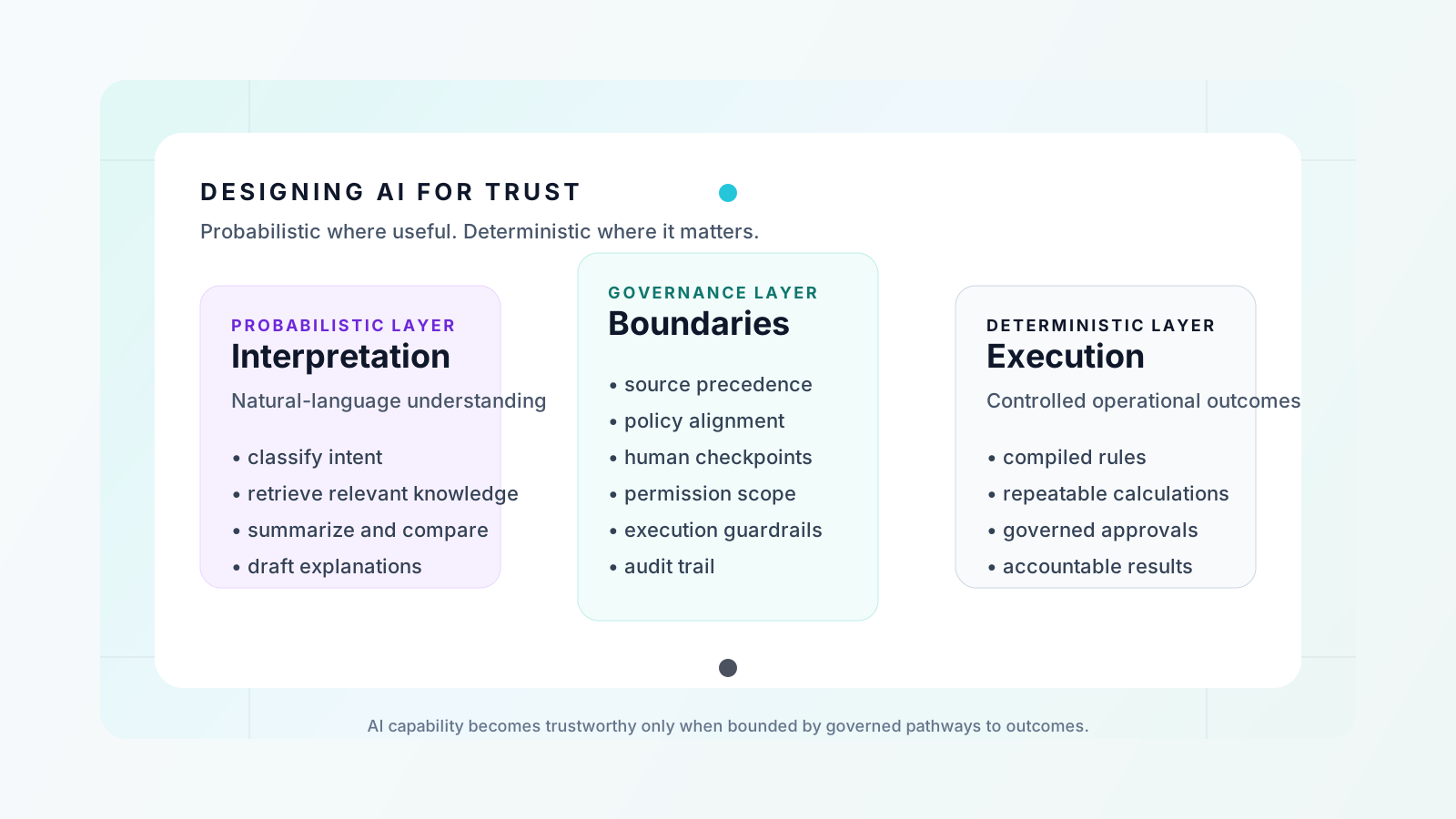
- HeyHR builds on three principles: deterministic accuracy, governed access and audit-ready provenance.
- Governance is not the opposite of autonomy. It is what makes greater autonomy possible.
“With great power comes great responsibility.” — Spider-Man
It is one of the most memorable lines in superhero history. And as AI evolves from answering questions to taking actions, it feels increasingly relevant.
For humans, power and responsibility generally go hand in hand. We make decisions, take actions, and are expected to take responsibility for their consequences.
But what happens when the decision-maker is an AI agent?
Unlike humans, AI agents cannot be held morally accountable for their decisions in the same way. Yet they are increasingly capable of accessing sensitive information, making decisions, and executing actions that have real-world consequences.
And perhaps the more important question is not simply who should be held responsible when something goes wrong, but how we ensure AI agents make appropriate decisions in the first place.
As AI agents become more autonomous, this question deserves much greater attention.
The need for clearer guidelines
AI agents are evolving faster than the frameworks designed to govern them.
How much autonomy should an AI agent have? What information should it be allowed to access? Which actions should require human approval?
These are not merely technical questions. They require clearer guidelines, shared standards, and broader societal consensus.
Singapore has recently taken important steps in addressing these challenges.
On 6 November 2026, the Cyber Security Agency of Singapore (CSA), the Government Technology Agency (GovTech), and the Infocomm Media Development Authority (IMDA) issued a joint advisory, Using Personal AI Agents Safely and Securely: What Consumers Should Know, highlighting the risks of excessive autonomy and unrestricted access to sensitive information.
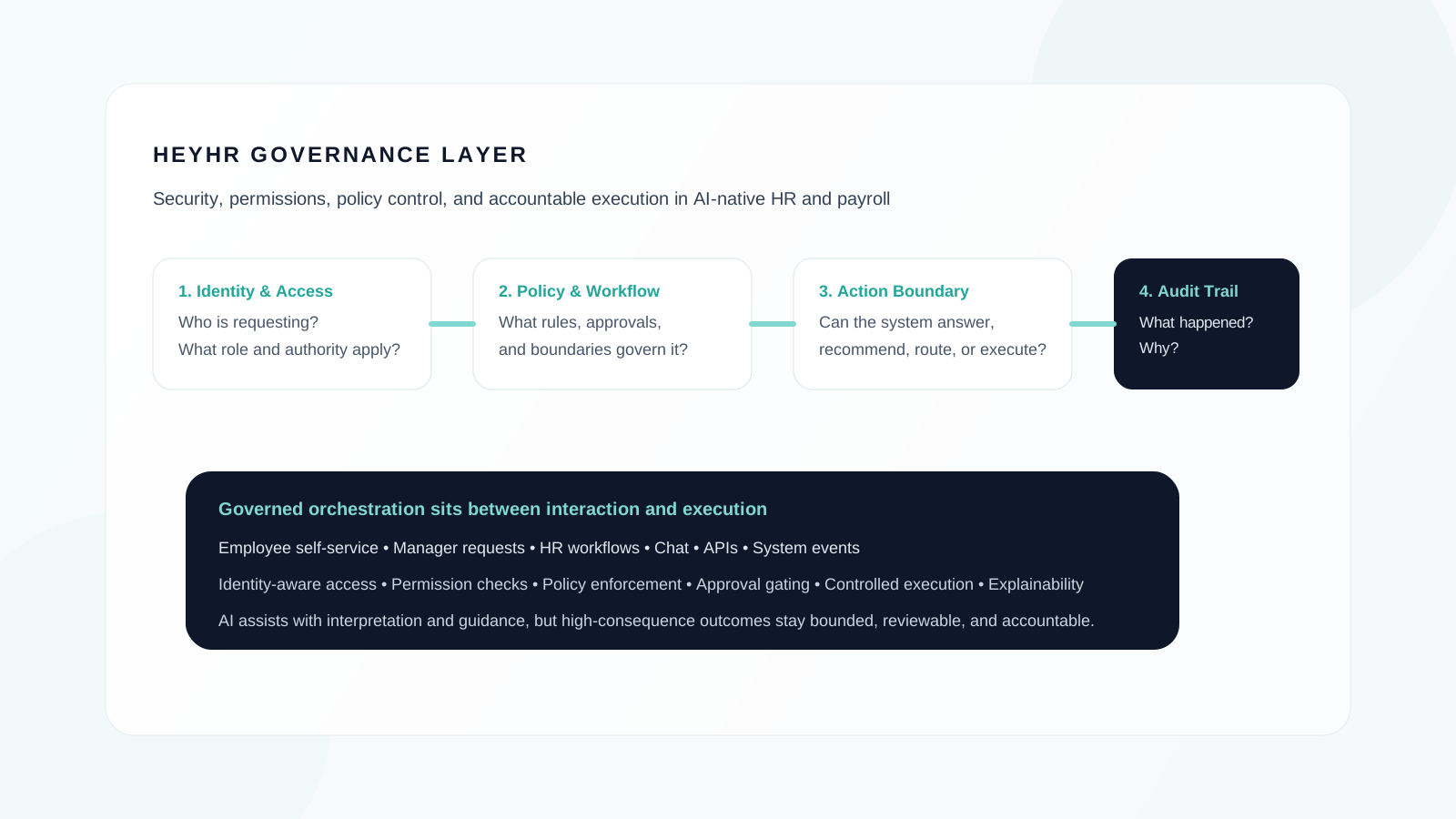
The advisory recommends limiting unnecessary permissions, retaining human control over consequential actions, and managing access through actual system settings rather than relying solely on conversational instructions.
This follows Singapore’s broader efforts to establish responsible AI governance, including IMDA’s Model AI Governance Framework for Agentic AI and CSA’s Securing Agentic AI security guidance.
These initiatives reflect a growing recognition that AI agents require clearer boundaries, appropriate human oversight, and stronger accountability as their capabilities expand.
The message is not that AI agents should be prevented from becoming more capable. Rather, their growing capabilities must be accompanied by appropriate boundaries, oversight, and accountability.
As AI agents become part of everyday business operations, these principles will become increasingly important.
Why trust matters even more in HR
Security and trust matter in every enterprise system. But in HR and payroll, the stakes are particularly personal.
HR systems manage salaries, personal information, leave entitlements, employment records, and statutory obligations.
An incorrect payroll calculation is not merely a numerical error. It can affect someone’s livelihood.
An inappropriate disclosure of employee information is not simply a technical security incident. It can compromise an individual’s privacy and undermine trust in their employer.
And an AI agent taking an unauthorised action can have consequences that extend well beyond the software itself.
Because at the end of every HR process, there is a person.
This is why we believe AI in HR requires more than powerful models and sophisticated automation. It requires systems that are accurate, governed, explainable, and accountable by design.
How we approach this at HeyHR
At HeyHR, these concerns are not new considerations introduced in response to emerging AI regulations or guidelines. They have been central to how we approach building our AI-native payroll and HR platform from the beginning.
Our architecture is guided by three fundamental principles.
1. Deterministic accuracy: AI doesn’t guess payroll
Payroll calculations must be accurate, consistent, and verifiable.
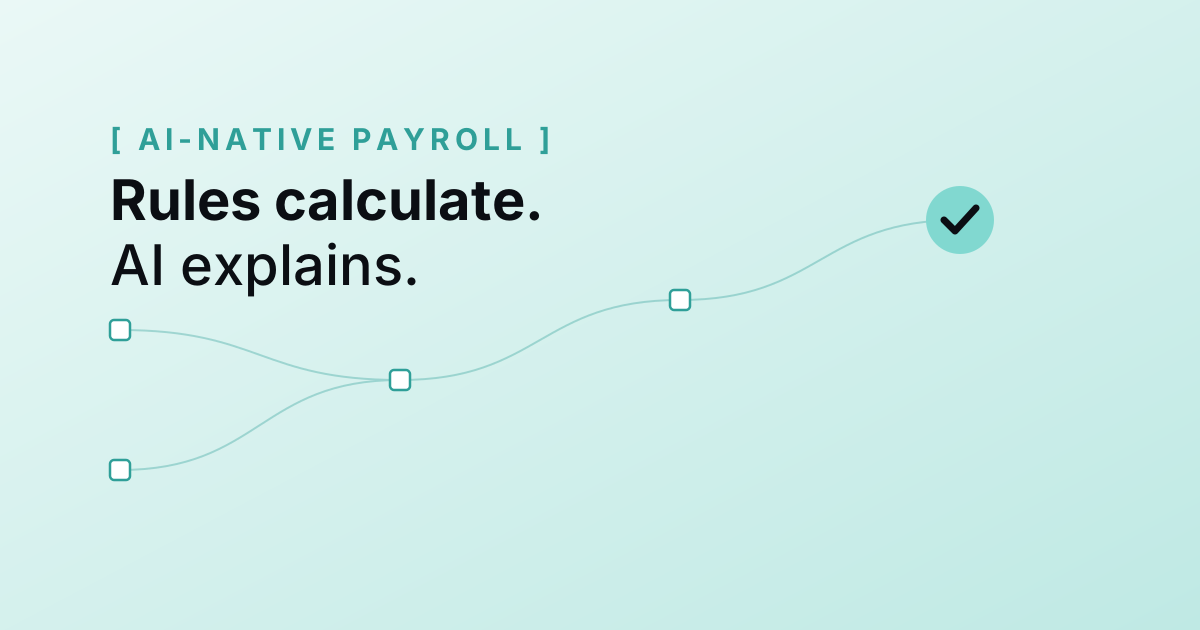
At HeyHR, payroll calculations are performed by a deterministic, rules-based engine, not generated or guessed by a large language model.
Our AI agent, Metis, can help users understand payroll information, prepare workflows, identify potential issues, and navigate complex HR requirements. But the underlying calculations follow defined statutory and business rules.
AI provides intelligence. Deterministic systems provide accuracy.
2. Governed access: intelligence does not equal authority
An AI agent’s ability to access information should never automatically grant it permission to do so.
HeyHR is designed around governed access, where permissions are enforced at the system level rather than relying solely on instructions given to an AI model.
What Metis can see and do depends on the user’s role, permissions, and organisational policies.
An employee should be able to ask about their own payslip without gaining access to someone else’s salary information. An HR administrator may have broader access, but still operates within clearly defined boundaries. And sensitive actions may require explicit authorisation or human approval.
A prompt is not a security boundary. Real access control must be enforced by the system.
3. Audit-ready provenance: recorded, not reconstructed
Trust also requires transparency.
When a payroll figure is calculated or an AI agent performs an important action, organisations should be able to understand what happened and why.
HeyHR is designed to preserve traceability across payroll calculations, supporting rules, and authorised actions. This allows users to verify results, understand their basis, and review important activities when necessary.
Rather than relying on an AI-generated explanation after the fact, the underlying evidence should be available from the process itself.
Every number should have a reason. Every important action should leave a trace.
Trust enables greater autonomy
These principles are not simply safeguards designed to restrict what AI can do. We believe they are what will allow AI agents to do more.
Consider our vision for Metis.
Traditional HR software has largely been designed for HR administrators. At HeyHR, we believe AI can extend meaningful HR support to every employee.
Each employee can have a personal AI HR agent to answer questions, access relevant information, and assist with everyday HR tasks. Meanwhile, HR teams can delegate more administrative work, receive proactive assistance, and focus on decisions that require human judgement.
But this becomes practical only when organisations can trust that every interaction respects their policies, permissions, and controls.
Personal for employees. Governed by your company.
The better we govern AI agents, the more confidently we can empower them. In that sense, governance is not the opposite of autonomy. It is what makes greater autonomy possible.
Trust is not an add-on. It’s our foundation.
AI models will continue to become more capable. Agents will gain access to more tools, more information, and more opportunities to act independently.
But greater intelligence alone will not determine which AI systems businesses ultimately trust with their most important operations. Accuracy, accountability, transparency, and control will matter just as much.
At HeyHR, trust is not simply a security feature or a compliance checkbox. It is a fundamental design principle that shapes how our AI works, what it can access, how it executes tasks, and how its results can be verified.
And these principles translate into tangible value for our customers: more reliable payroll, safer AI interactions, greater transparency, and the confidence to bring AI assistance to every employee.
We believe this is what responsible AI-native enterprise software should look like.
To return to where we started:
With great AI power comes great human responsibility. At HeyHR, we build that responsibility into our technology.